
Plan A vs Plan B
Not every mistake means the whole lesson needs to change. The key is recognising when the original plan still fits and when the evidence tells you the pupil now needs something different.
When the Original Lesson Still Fits
If the pupil makes a minor or isolated mistake, the original lesson may still be completely appropriate.
You might:
- help the pupil reflect on what happened
- give brief feedback
- adjust the level of help if needed
- give them another opportunity to practise
- reassess what happens next
When the Evidence Changes the Priority
Sometimes the pupil’s performance shows that something more important now needs your attention.
This might happen because of:
- a safety-critical issue
- a repeated or habitual fault
- a problem that prevents the original lesson progressing
- evidence that the pupil needs a different level of support or challenge
In that situation, the lesson may need to change direction.
Use the Evidence to Decide
This simple flowchart shows the difference between continuing with Plan A and moving to Plan B.
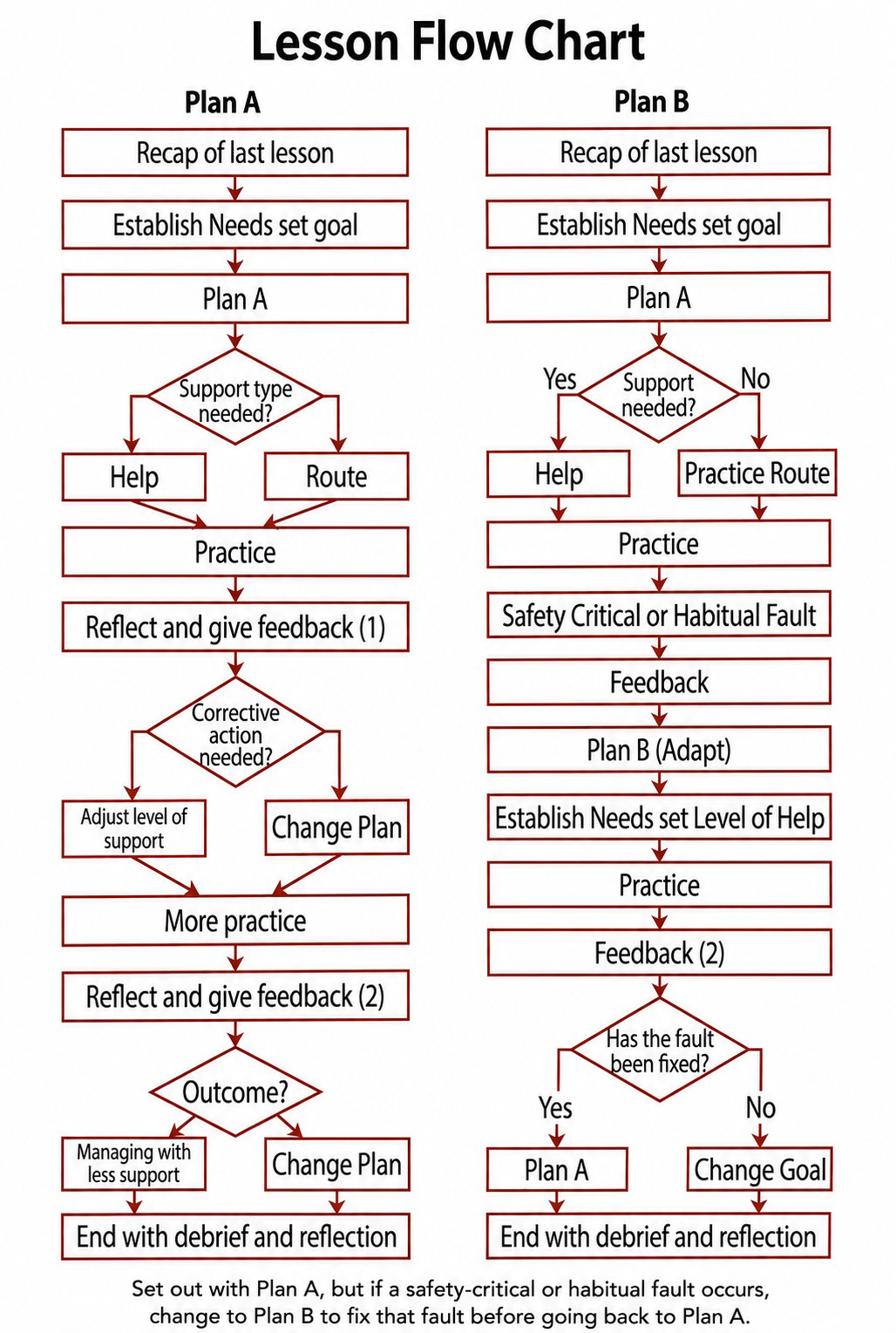

Plan A or Plan B?
Your lesson is focused on roundabouts, but the pupil repeatedly approaches junctions too quickly and is leaving too little time to observe and decide safely.
Adaptation Goes Much Deeper
In the full ADI Part 3 Training Course, we explore how to recognise when Plan A still fits, when Plan B is needed, how to adjust support and challenge, and how to review whether the change has actually worked.